10
Min reading
18/6/2026
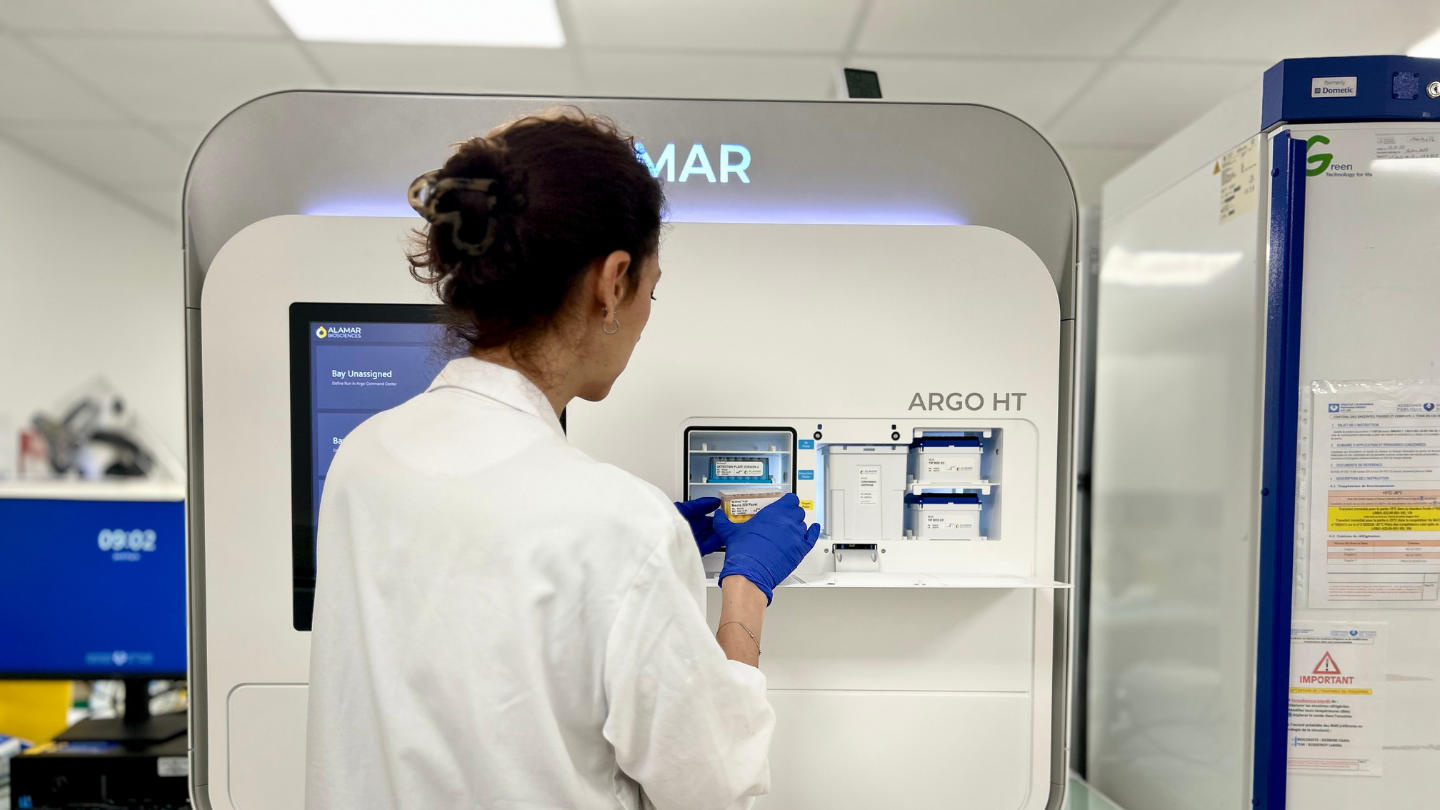
Plateforme clinique de protéomique ultra-sensible NULISA™
L’Institut reConnect, l’AP-HP et le biocluster Brain&Mind inaugurent une plateforme clinique de protéomique ultra-sensible à l'hôpital Lariboisière AP-HP
Meet Salvatore Azzollini, COO of Lutece Dynamics, a French start-up that aims to revolutionize cell imaging.
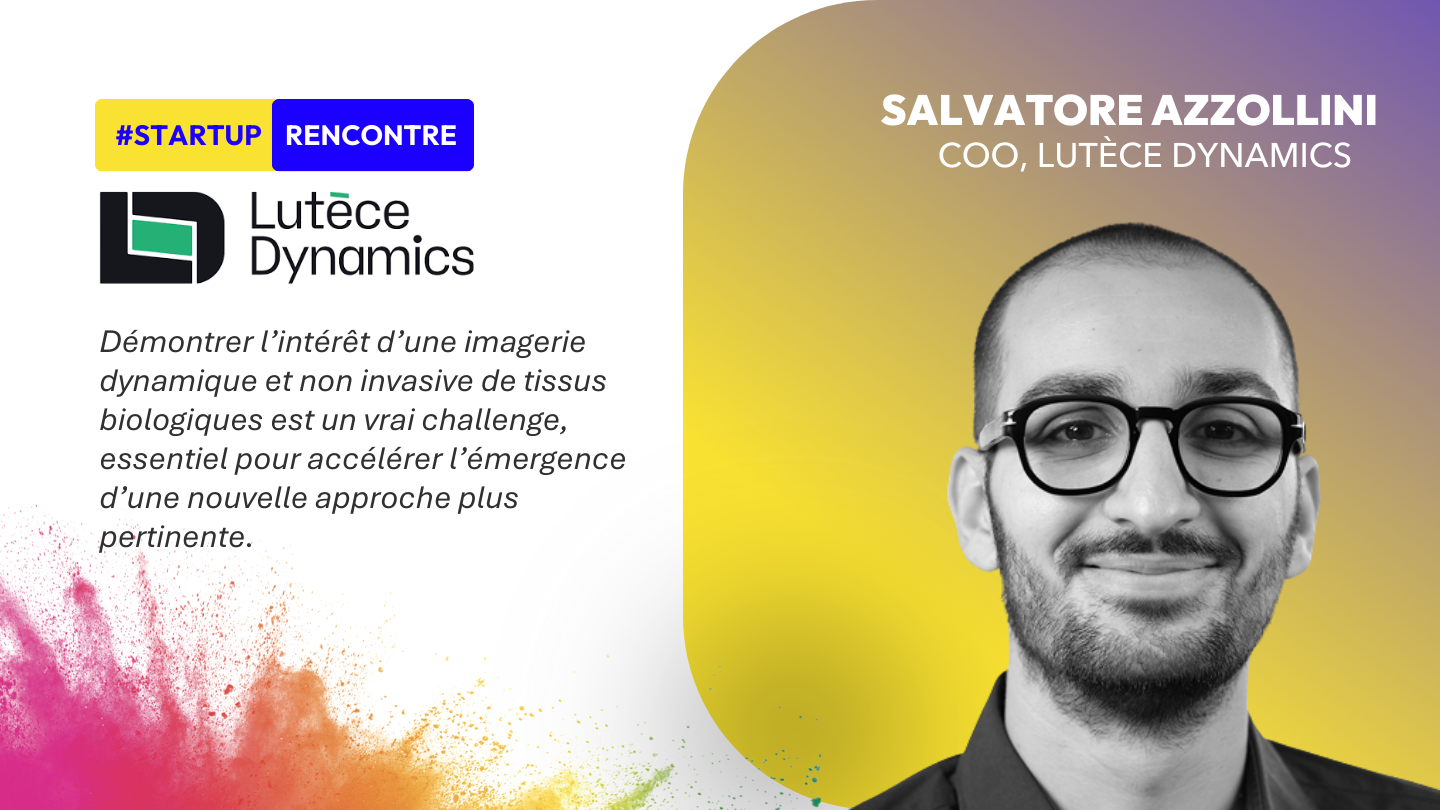
Meeting with Salvatore Azzollini, COO of Lutece Dynamics, a young French company that aims to revolutionize cellular imaging. Its non-invasive and label-free technology opens a new window on organoids, spheroids and 3D models, without ever altering them.
Through this discussion, Salvatore reveals to us how Lutece Dynamics is preparing a new generation of imagery capable of continuously revealing the intimate activity of cells. An advance that could well transform biomedical research... and accelerate the transition to more relevant and ethical models.
Salvatore Azzollini:
“Lutece Dynamics proposes a new concept of label-free and non-invasive tissue imaging, applied as a first step to neuronal organoids. It makes it possible to observe the inside of cells and to follow their evolution over time, without altering them, unlike the majority of current microscopy technologies.
The solution is integrated into a module compatible with all types of commercial microscopes. The idea is to adapt it to the needs of the end user by integrating it directly into their usual equipment.”
Salvatore Azzollini:
“We strongly believe in the potential of 3D culture models that reproduce the functioning of pathological tissues because they make research more relevant and less dependent on animal experiments. An essential added value of our technology compared to the competition is its ability to bypass the difficulty of effectively imaging thick and opaque fabrics. For this reason, we have adapted our microscopy platform to organoid culture systems, in particular thanks to a partnership with Cherry Biotech, which is key for us: it will allow us to demonstrate our technology and its adaptability to high-throughput organoid cultures. Since biomedical research focuses on 3D cell models, our adaptation is essential to address the preclinical testing market.”
Salvatore Azzollini:
“It would be to convince users of optical microscopy that our technology, which is an alternative today, can tomorrow become the reference solution for the analysis of healthy and pathological biological tissues, capable of replacing the current principles of tissue imaging. Our challenge is to explain the value of making this shift as soon as possible and to implement this paradigm shift. Current technologies have 20 or 30 years of history behind them, we need to accelerate the transition to more relevant, non-invasive and non-marking tools.”